
A successful business website needs to do far more than create a positive first impression. It should communicate clearly, make important information easy to find, support customer journeys, and remain adaptable as the organisation develops. For homeware brands, health and wellness businesses, and retailers in Chorley, these requirements can directly influence how effectively a digital presence supports wider commercial goals.
Professional web designers approach business sites strategically, considering how structure, content, functionality, and user behaviour work together. Rather than concentrating exclusively on visual trends, the process should establish a reliable digital foundation that can continue serving the organisation as customer expectations and business priorities evolve.
Building a stronger site therefore requires decisions based on purpose rather than appearance alone. The following five strategies explain how thoughtful planning can produce a professional, scalable, and results-driven platform.
Start With Clear Business Goals and User Requirements
Every effective project should begin by defining what the organisation needs its online presence to accomplish. Without clear objectives, it becomes easy to make decisions based on personal preferences or trends rather than measurable business requirements.
Some companies primarily need enquiries, while others want to increase product sales, encourage appointments, communicate expertise, or provide customers with useful information. Identifying these priorities early helps determine which pages, features, and calls to action deserve the greatest attention.
Understanding the audience is equally important. A homeware customer comparing products may behave differently from someone researching a wellness service. Retail visitors might want to move quickly between categories, while customers considering a higher-value service may require more detailed information before making contact. Planning around these differences creates more purposeful user journeys.
Good website design translates these business objectives into an organised visual and structural experience. Important information should receive appropriate prominence, while supporting content should remain accessible without distracting visitors from the primary purpose of each page.
Research can also identify unnecessary features before they consume time and budget. Not every business needs complicated animations, extensive interactive elements, or numerous conversion routes. Features should earn their place by solving a genuine problem or improving the experience.
Clear goals also make future evaluation easier. Instead of judging the finished site purely by appearance, businesses can consider whether users are reaching important pages, submitting enquiries, purchasing products, or completing other meaningful actions.
This goal-led approach provides a stronger foundation for subsequent decisions and reduces the risk of creating an attractive platform that fails to support practical business needs.
Build a Logical Structure and Straightforward Navigation
Visitors should be able to understand where they are and where they need to go without unnecessary effort. Clear structure reduces confusion and creates a more professional experience, particularly for businesses with expanding product ranges or service offerings.
A well-organised site usually starts with a simple hierarchy. Core information should be accessible through the primary navigation, while related content can sit naturally beneath relevant sections. Businesses should avoid creating excessive levels that force visitors through numerous pages before reaching useful information.
Several practical principles can improve structure:
- Keep primary navigation focused on the pages customers are most likely to need.
- Use familiar, descriptive menu labels instead of vague or overly creative terminology.
- Group related products, services, or resources logically so users can predict where information will appear.
- Use internal links where they genuinely help visitors discover relevant supporting information.
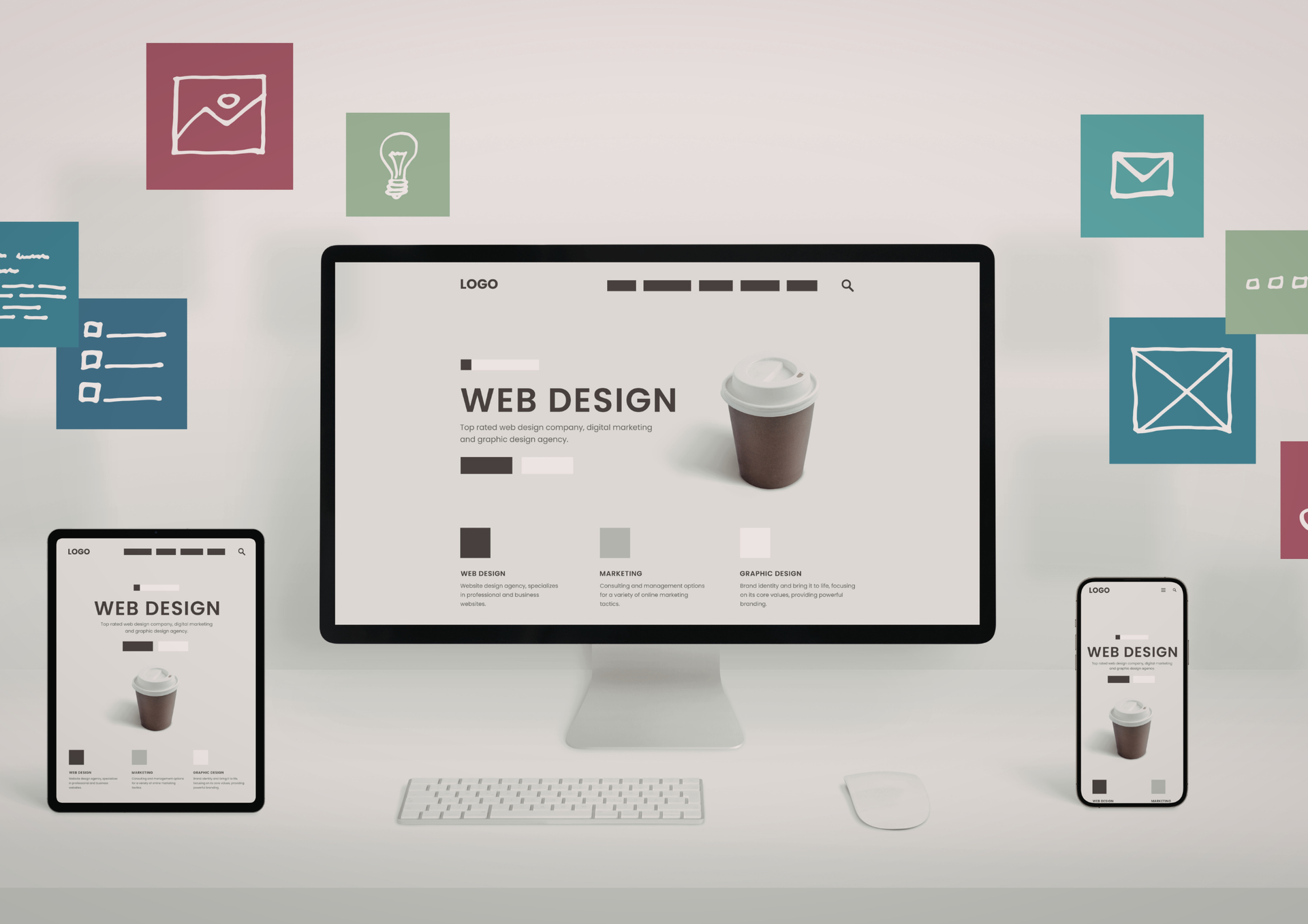
- Maintain consistent navigation patterns across desktop, tablet, and mobile layouts.
- Provide obvious routes to important actions such as contacting the business, making a booking, or viewing products.
- Review the structure periodically as new content is added to prevent navigation from becoming cluttered.
Strong website development supports this organisation behind the scenes by ensuring pages, templates, and navigation components work consistently as the platform grows. A clear technical structure also makes future additions easier to manage without disturbing established user journeys.
For businesses in Chorley and elsewhere, scalability is particularly important. A small site might initially contain only a handful of services, but new offerings, resources, or locations may be introduced later. Planning the hierarchy with reasonable expansion in mind prevents these additions from making the site increasingly difficult to navigate.
Simplicity does not mean removing useful information. Instead, it means organising that information so visitors can reach it efficiently and understand how different parts of the business relate to one another.

Create Content Around Real Customer Decisions
Content should help visitors understand the business and make informed decisions. Filling pages with generic promotional language may create volume, but it rarely answers the questions that prospective customers actually have.
Effective content begins with relevance. Each page should have a defined purpose and provide information appropriate to the visitor's stage in the journey. A service page may need to explain what is offered, who it is suitable for, and what happens next. Product pages may require clear specifications, practical benefits, and straightforward purchasing information.
Headings should allow visitors to scan quickly and locate the sections that matter to them. Paragraphs should be manageable, with important information communicated directly rather than hidden within unnecessary wording. This is especially valuable for mobile users who may be researching businesses while travelling or multitasking.
Businesses searching for a website designer near me may initially focus on finding someone who can produce an attractive layout, but content planning deserves equal attention. The strongest visual presentation cannot compensate for messaging that leaves users uncertain about services, products, or the next step.
Trust also depends on accuracy and consistency. Contact information, opening details, service descriptions, prices where appropriate, and other practical information should remain current. Contradictory or outdated content can quickly undermine an otherwise professional presentation.
Homeware businesses can use content to clarify materials, dimensions, applications, and purchasing considerations. Wellness organisations may need to explain services carefully and set realistic expectations. Retailers can organise information around products, availability, delivery, and customer support. The exact requirements vary, but the principle remains the same: content should answer genuine customer questions.
Content should also be flexible enough to evolve. New products, services, frequently asked questions, case studies, or educational resources may become valuable as the organisation grows. Establishing consistent content patterns early makes these additions easier to introduce.
Prioritise Performance, Mobile Usability, and Accessibility
A visually impressive website offers limited value if it loads slowly, becomes awkward on a smartphone, or makes essential information difficult to access. Technical performance and usability should therefore be treated as fundamental parts of the project rather than final-stage improvements.
Experienced web designers consider how visual and technical decisions affect real users. Large media files, excessive effects, complicated navigation, and unnecessary scripts can create friction, particularly on mobile devices or slower connections.
Several areas deserve attention throughout the build:
- Images should be appropriately sized and optimised without sacrificing necessary visual quality.
- Mobile layouts should prioritise readable text, comfortable spacing, and touch-friendly controls.
- Buttons and links need sufficient separation to reduce accidental taps.
- Forms should request only information genuinely required at that stage.
- Navigation should remain predictable when moving between different screen sizes.
- Important content should not depend on unnecessarily complicated interactions.
- Page performance should be checked throughout the project rather than only immediately before launch.
- Accessibility considerations should influence typography, contrast, navigation, forms, and interactive components.
For retailers, performance can become increasingly important as product catalogues and imagery expand. Homeware businesses may depend heavily on high-quality photography, requiring a sensible balance between presentation and loading efficiency. Wellness businesses may rely on appointment forms or booking systems that must remain straightforward on smaller screens.
Testing should reflect realistic behaviour. Pages need to be checked across common devices, browsers, and screen sizes, while important journeys such as enquiries, purchases, and bookings should be completed from beginning to end.
Performance also requires attention after launch. Adding oversized images, unnecessary plugins, or poorly implemented features over time can gradually reduce speed and reliability. Establishing sensible processes for future updates helps preserve the quality of the original build.
Plan for Scalability Instead of Designing Only for Launch
A business website should reflect current requirements without becoming trapped by them. Organisations change: new products are introduced, service areas expand, teams grow, marketing strategies develop, and customer expectations shift. A platform that cannot accommodate reasonable change may require substantial redevelopment sooner than expected.
Scalability starts with recognising realistic future scenarios. A retailer might expect to introduce additional categories or connect new stock systems. A homeware company could expand from a limited catalogue into online ordering. A wellness business may eventually add practitioners, locations, resources, or appointment options.
Working with a professional web design company can help businesses distinguish between sensible preparation and unnecessary overengineering. The aim is not to build every possible future feature immediately, but to create a structure that makes likely additions manageable when they become necessary.
Flexible templates can support additional pages without producing inconsistent layouts. Organised content management makes routine updates easier, while a considered technical foundation can accommodate integrations and new functionality without forcing the entire platform to be replaced.
Businesses should also consider ownership and ongoing management. Staff may need to update products, publish articles, change service information, or edit images. Administrative systems should therefore be understandable enough for appropriate team members to perform common tasks confidently.
Scalability also applies to branding. Visual systems should provide consistency while leaving enough flexibility for campaigns, new services, or changing content requirements. A rigid layout that only works with the original material can quickly become restrictive.
Planning for longevity can provide better value because future improvements become incremental rather than disruptive. The site can evolve alongside the organisation instead of becoming an obstacle whenever requirements change.
Building a better business site requires a combination of strategy, usability, content planning, technical performance, and long-term thinking. Each decision should contribute to a clear purpose rather than simply following current visual trends.
For homeware brands, health and wellness organisations, retailers, and entrepreneurs in Chorley, a strong digital presence should make it easier for customers to understand the business and take meaningful action. It should also remain manageable as products, services, content, and operational requirements change.
By establishing clear objectives, simplifying navigation, creating useful content, prioritising performance, and preparing for realistic growth, businesses can develop digital platforms that continue to provide value beyond their initial launch.
ETA Web Design Chorley takes a practical, business-focused approach to creating professional digital platforms. Our team begins by understanding the organisation, its customers, and the outcomes the site needs to support before determining the most appropriate structure and functionality.
Our web designers prioritise clarity, usability, performance, and scalability rather than unnecessary complexity. Whether a business needs a straightforward professional presence or a platform capable of expanding alongside its operations, we consider both immediate priorities and realistic future requirements.
By combining thoughtful planning with practical execution, ETA Web Design Chorley helps businesses create reliable digital platforms that support customer engagement and long-term growth. Our focus is on delivering a solution that remains useful, manageable, and aligned with the organisation as its needs continue to evolve.
Check out our latest X update on how
web designers use effective strategies to build better, more professional business sites.